
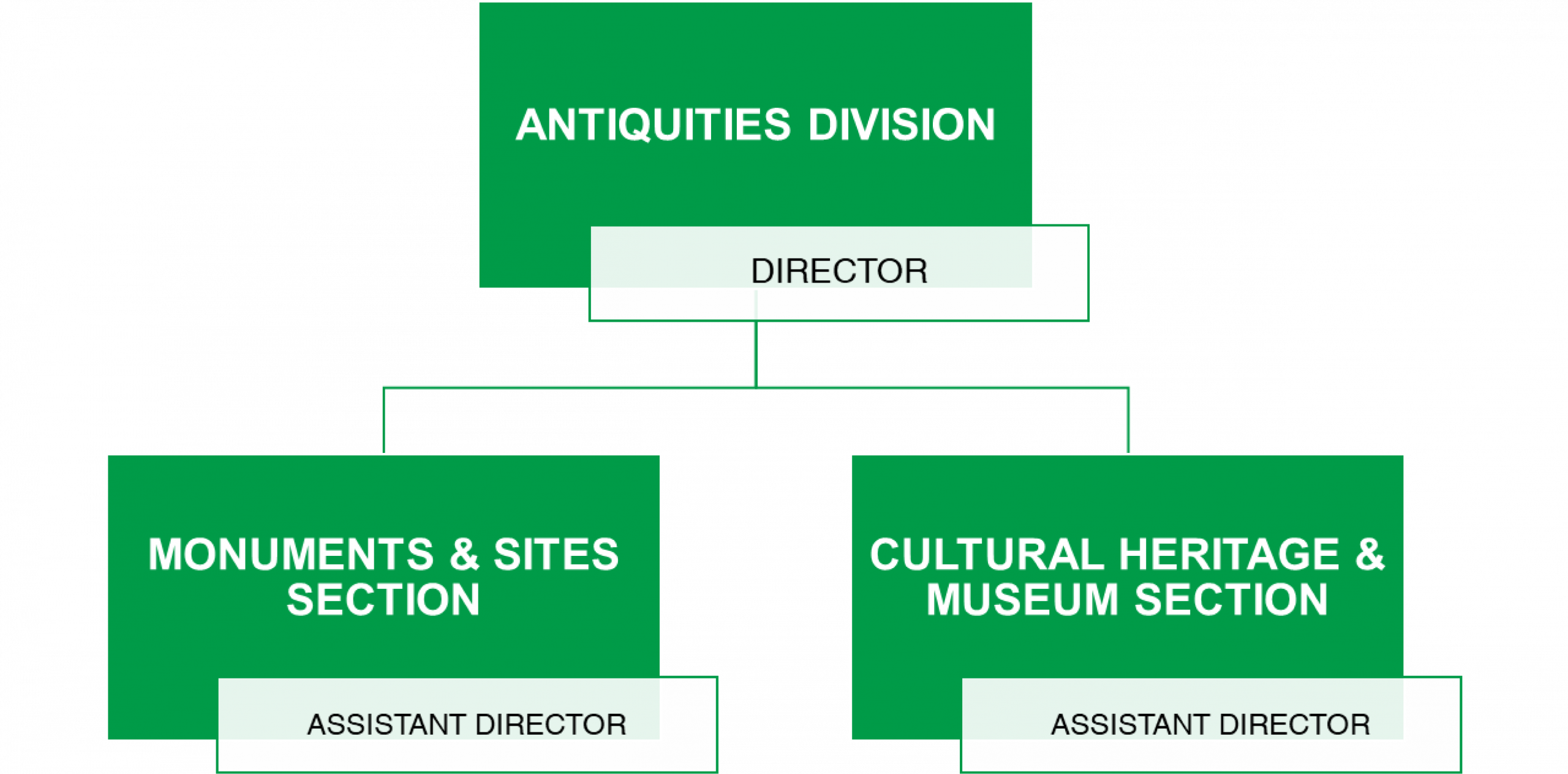
To conserve, protect, develop and promote National Cultural Heritage on sustainable basis.
This Division will perform the following functions:
Led by a Director
The Antiquities Department, as it was then known, was established in 1957 as a unit of the Ministry of Education. Its office was in Bagamoyo, where there was a plan to set up a School of Archaeology, and the department was intended to be incorporated into that school once it was established. However, the school was never founded, and the Antiquities Department’s offices were not relocated to Dar es Salaam until 1960.
In 1962 two important changes in the cultural heritage sector were introduced. First, a ministry responsible for this area of culture was created, called the Ministry of National Culture and Youth. Second, the King George V Memorial Hall was repurposed as the National Museum and Memorial.
The law for protecting and preserving the country’s antiquities remained the 1937 Antiquities Preservation Act. Under that law legal authority was granted to the Colonial Governor in Council. However, that order did not clearly specify the types of objects or structures that should be protected, although generally it began to be understood that such objects, structures, and areas should have historical, archaeological, and scientific importance. This order remained the only antiquities law until 1964, when Antiquities Act No. 10 of 1964 was enacted by Parliament. Although the 1937 order was repealed, this action built upon the order by incorporating its basic provisions and expanding their scope, enabling the antiquities law to become more complete and updated.
Antiquities Act No. 10 of 1964 was amended in 1979 (by the Revised Act No. 22 of 1979). This was followed by the Minor Museums Ordinance for Protected Objects and Regulations (1991). In practice to-date, The Antiquities Act Cap 333 provide for the preservation and protection of sites and articles of archaeological, historical or natural interest and for related matters.
Led by an Assistant Director
Led by an Assistant Director