To conserve, manage, develop and sustainably utilize wildlife resources in the Country
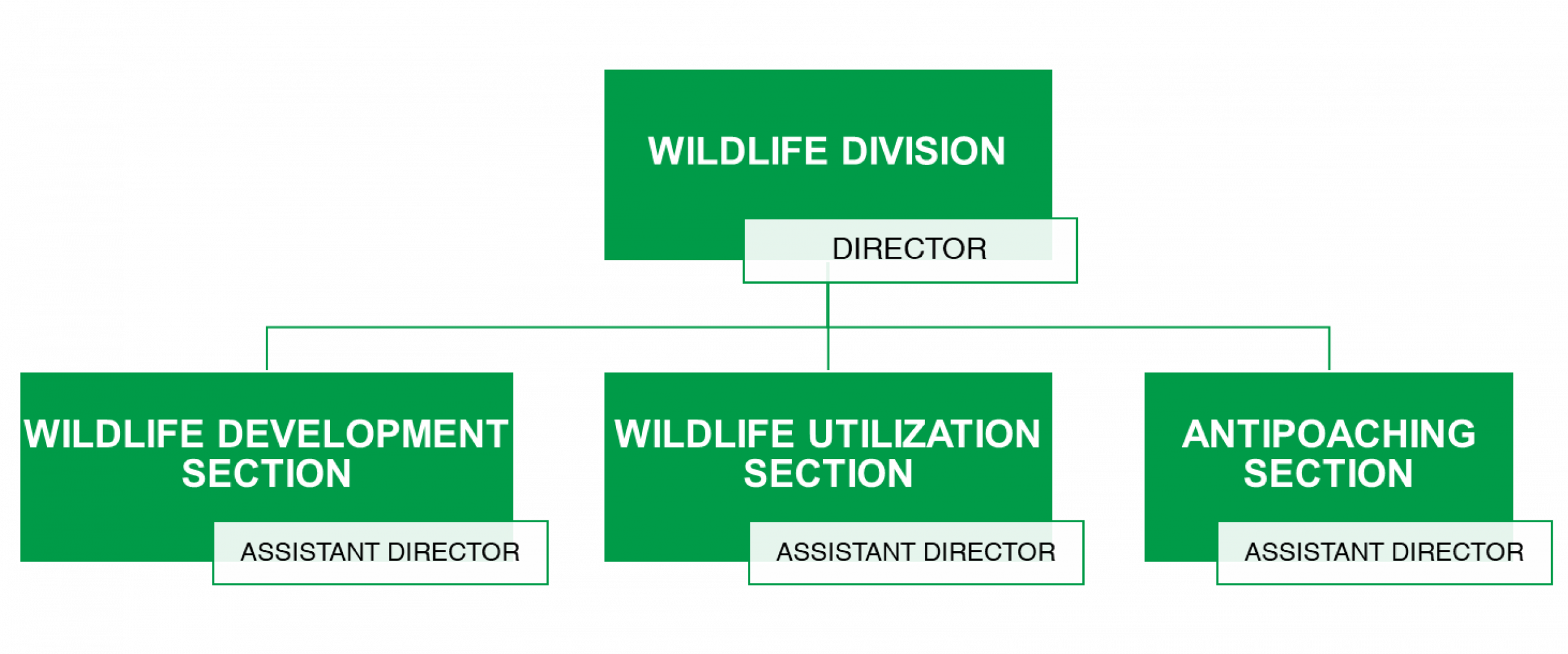
This Division will perform the following functions:
Led by a Director
The history of Wildlife conservation in Tanzania goes way back to 1891, when laws controlling hunting were first enacted by the German rule. These laws regulate the off take, hunting methods and trade in wildlife, with some endangered species being fully protected. Selous Game Reserve was the first game reserve established in 1905 by the Germans and was gazetted in 1922. Game Reserves were chosen mainly for their concentration of big games rather than their species richness.
The British Government established the Game Department in 1921. The role of the game department was to administer game reserves, enforce hunting regulation and protect people and crops from problematic and destructive wild animals. Later on, Ngorongoro crater and Serengeti Game Reserve were established in 1928 and 1929 respectively.
Tanganyika was famous for its species richness, numbers and more specifically of big games, and scenic landscapes. Since then and until today, it has attracted a great number of wealthy hunters. The history of tourist hunting industry dates back in 1946 when game-controlled areas were established and divided into hunting blocks whereby Professional hunters and their clients could hunt trophy animals.
Tanzania is among the few countries world-wide that is endowed with immense natural resources and wildlife diversity. She has set aside huge chunk of its landmass approximately 32.5% legally for the protection of wildlife resources. This makes Tanzania the Top most country in Africa that is very committed to the conservation of natural resources. These areas include National Parks (the highest category of conservation status), Ngorongoro Conservation Area, Game Reserves and Game Controlled Areas under the Central Government and Community Wildlife Management Areas (WMAs) to protect and manage wildlife in the community lands. In addition, some of these protected have acclaimed international recognition such as World Heritage Sites, Biosphere Reserves and Global Geoparks due to their ecological, biodiversity, scientific and educational values.
Since independence in 1961, it was the policy of the Government of Tanzania to continue with the extension of the National Parks, Game Reserves and Game Controlled Areas and Community Wildlife Management Areas (WMAs). To date, Tanzania boost of the tremendous increase of its 21 National Parks from only three (3), 23 Game Reserves from only nine (9), 29 Game Controlled Areas and the Ngorongoro Conservation Area in 1961 under the Central Government and 24 Wildlife Management Areas (WMAs) managed by the Communities.
Wildlife Division (WD) is responsible for the provision of policy and strategic direction on all the matters regarding the management, development and sustainable utilization of wildlife resources in Tanzania. The Division also provides the policy direction on international obligation pertaining to sustainable management and utilization of wildlife resources in the country. In addition, the WD facilitates the establishment of Wildlife Captive facilities and Wildlife Management Areas (WMAs), creates awareness and disseminates information about wildlife management to the village communities in their village lands.
Tanzania National Parks (TANAPA) is a parastatal organization responsible for the management and development of the National Parks.
Ngorongoro Conservation Area Authority (NCAA) is a parastatal organization responsible for the management and development of Ngorongoro Conservation Area.
Tanzania Wildlife Management Authority (TAWA) is a Body Corporate responsible for the biodiversity conservation and sustainable management of wildlife resources outside the National Parks, Ngorongoro Conservation Area and Forest Reserves. The Institution is responsible for the wildlife management and development of Game Reserves, Game Controlled Areas, Ramsar Sites, Wildlife Management Areas, Wildlife in Captivity and Open Areas.
College of African Wildlife Management MWEKA (CAWM) provides need-based training to protected area and wildlife managers, environmental management and hospitality industry practitioners by offering a variety of awards for long and short courses in Wildlife, Environmental and Tourism Management.
Tanzania Wildlife Research Institute (TAWIRI) administer wildlife research in Tanzania with an overall objective of providing scientific information and provides the advisory role to the government and wildlife management authorities on the sustainable conservation of wildlife and tourism development
District Councils are responsible for conservation of wildlife outside national parks, game reserves, Game Controlled Areas and Ngorongoro Conservation Area, and protect people’s lives and properties from problematic and destructive wild animals.
Administratively the wildlife sector has divided its mandates into Central and Local Governments. The Central Government includes ministries, executive agencies, Parastatal organizations and independent departments, while the Local Government includes District Councils and Communities. The role of Central Governments is to provide clear national policy and regulatory framework to stimulate and promote participation of various stakeholders in the implementation of policy, manage core wildlife protected areas and providing professional standards and technical assistance in conservation and utilization of wildlife resources.
Led by an Assistant Director
This Section will perform the following activities:
Led by an Assistant Director
This Section will perform the following activities:
Led by an Assistant Director
This Section will perform the following activities: